Pulling tests and wind response measurements with minimal hardware effort
Stable readings at low force levels. In certain situations, manual force (300–400 N) is sufficient.
For force measurement during pulling tests, the LOFOR-compatible lineScale3 load cell is recommended
High resolution at lower force.
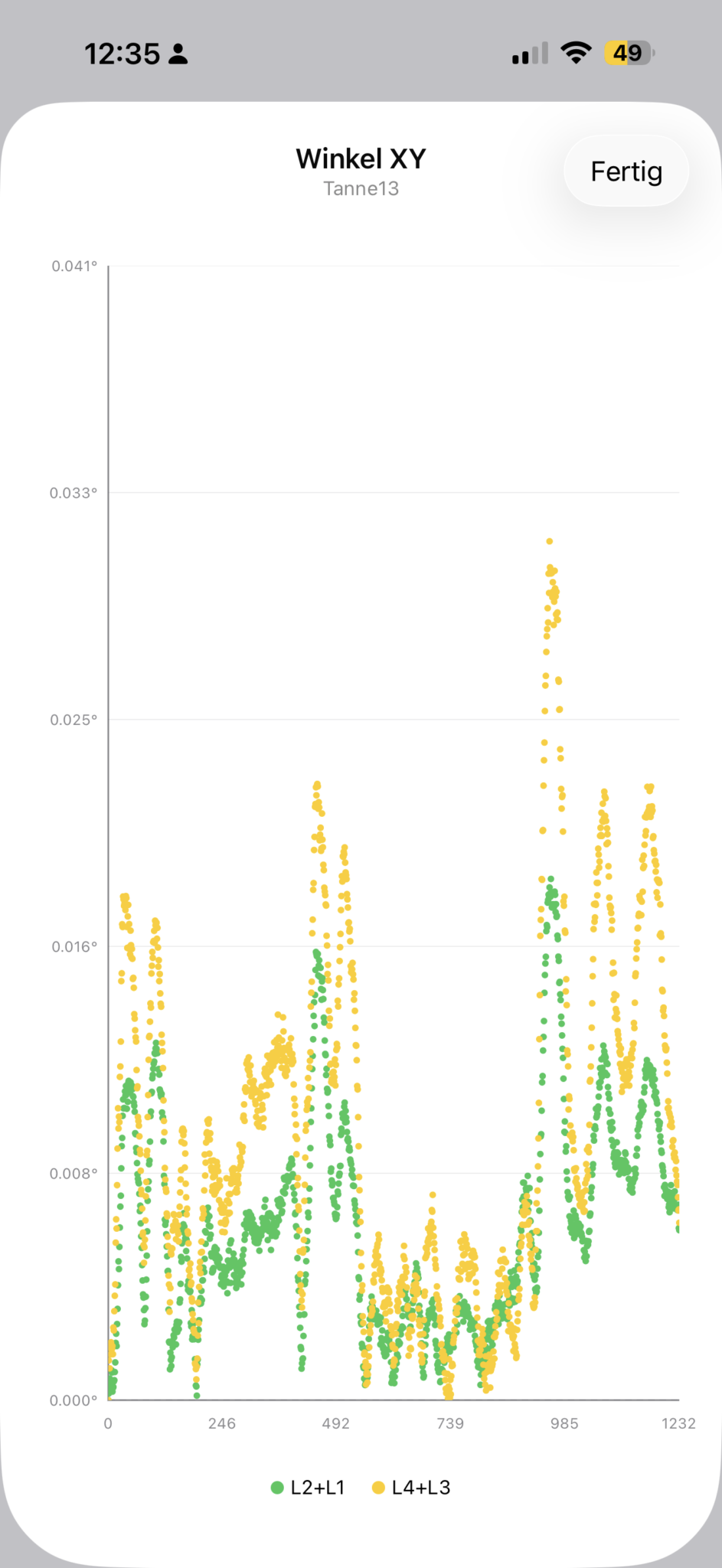
Measurement results with virtually unlimited accuracy. Through optical signal amplification, the smallest movements can be detected – ideal for trees with large diameters.
Thanks to the low force requirements, ecological snags and trees with graft unions can also be tested.
Individual wind gusts (from approximately 40 km/h) are already sufficient to measure the bending line and root plate inclination – under dynamic wind conditions.
Arbostat files can be read and written: laser angles are inserted as inclino values.
Distinguish and identify failure patterns early
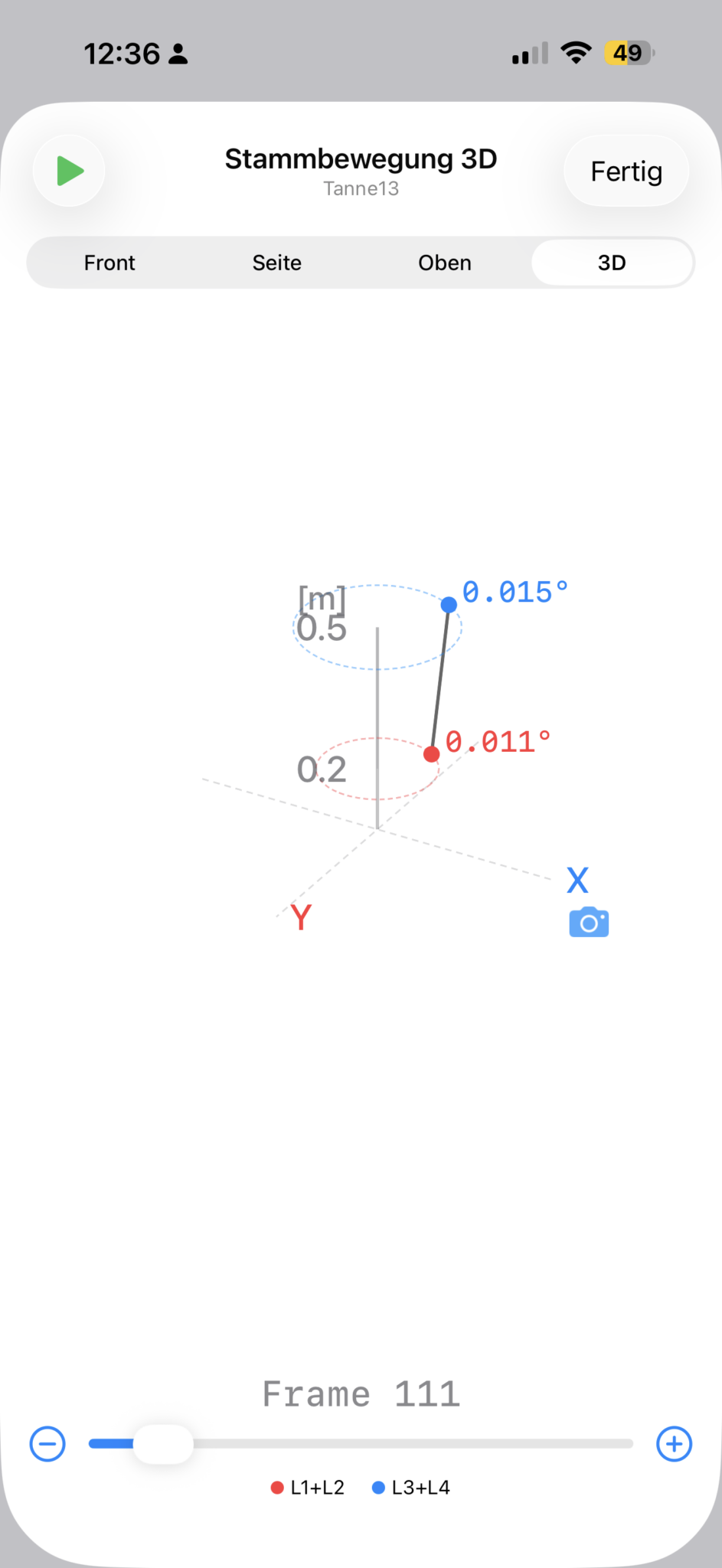
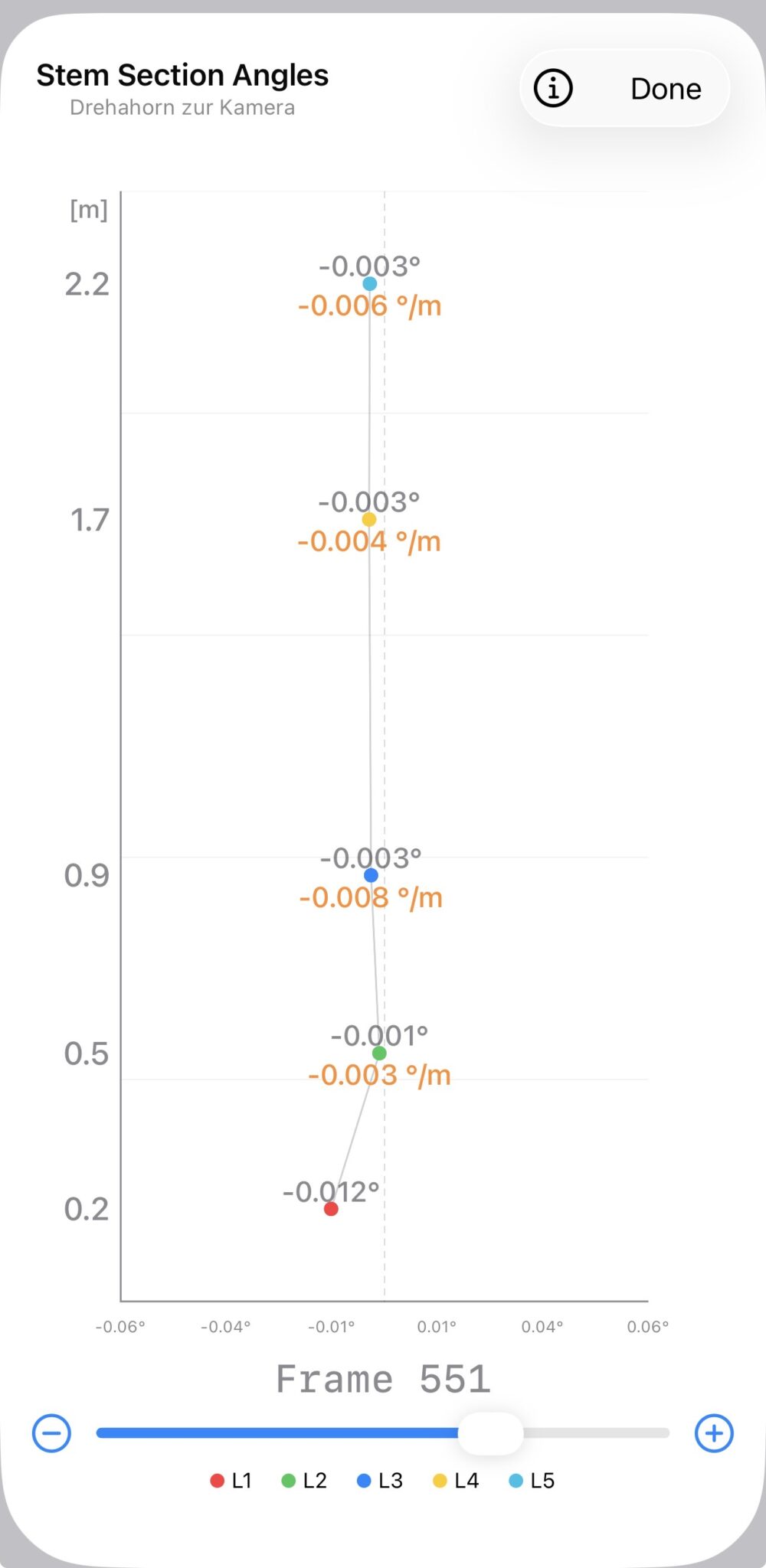
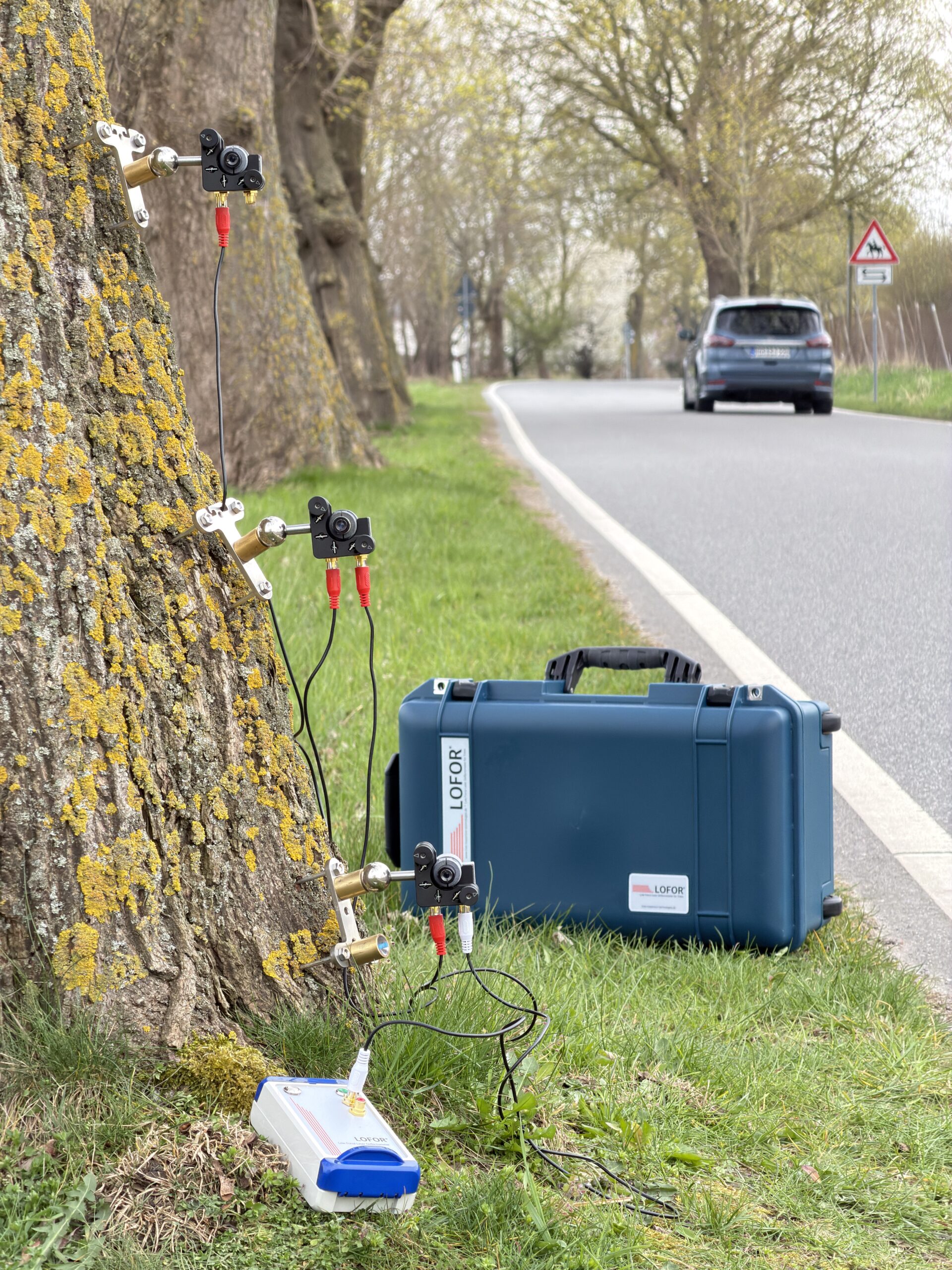
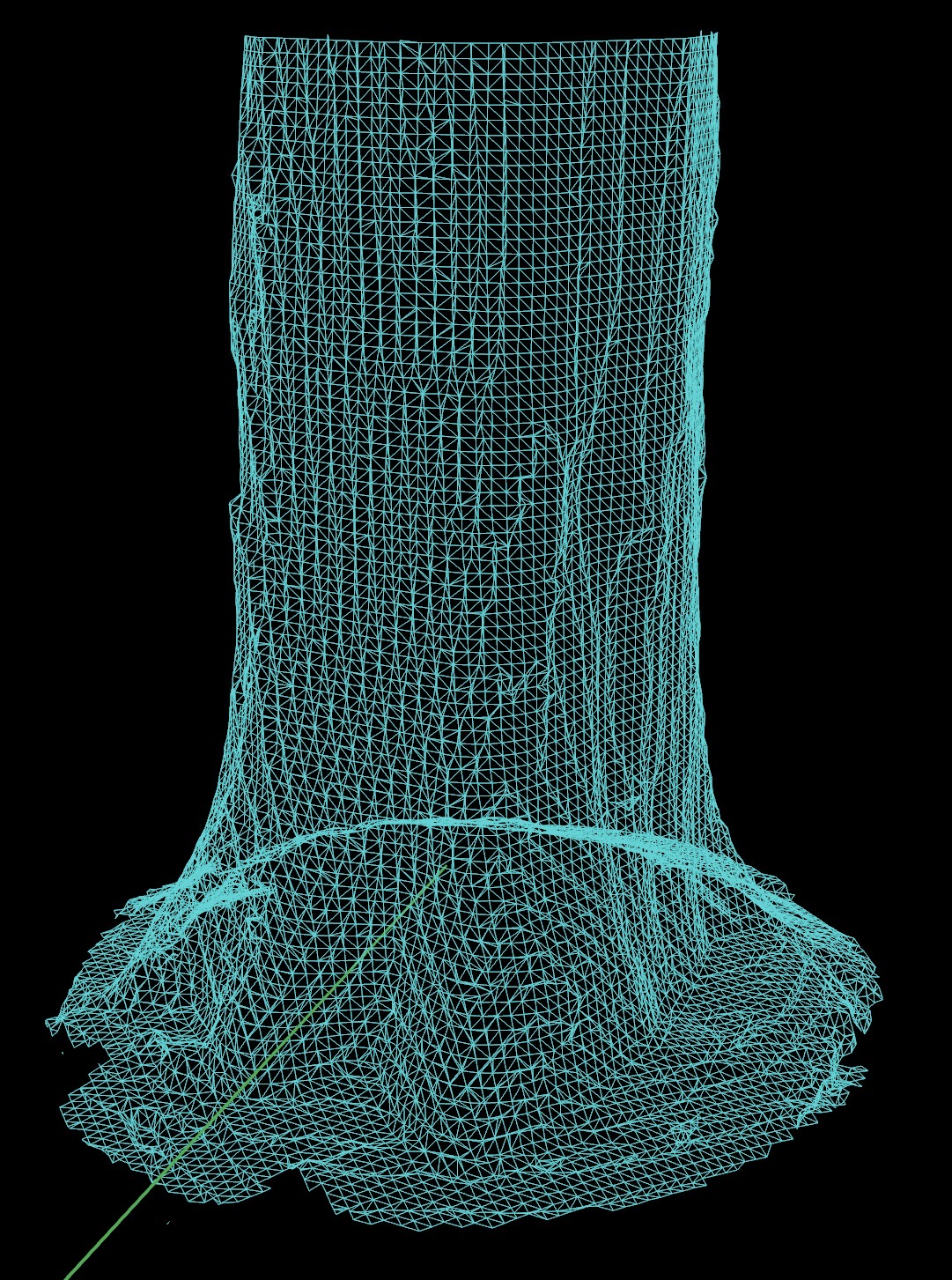
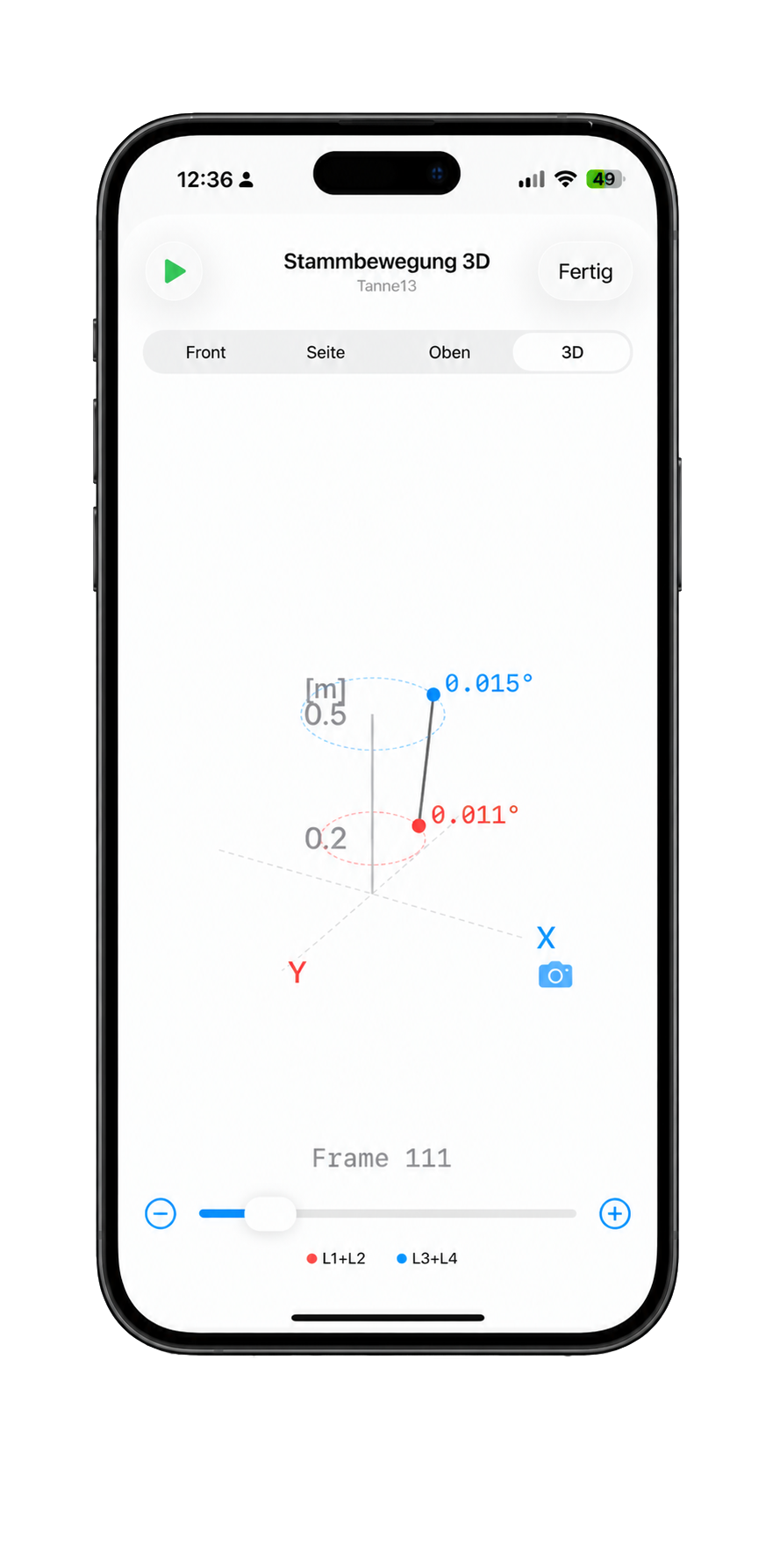
LOFOR measurement reveals where and how the trunk bends or twists (torsion around the trunk axis). Root damage manifests as the tree rotating in the ground – with little trunk bending.
Flexible, scalable precision
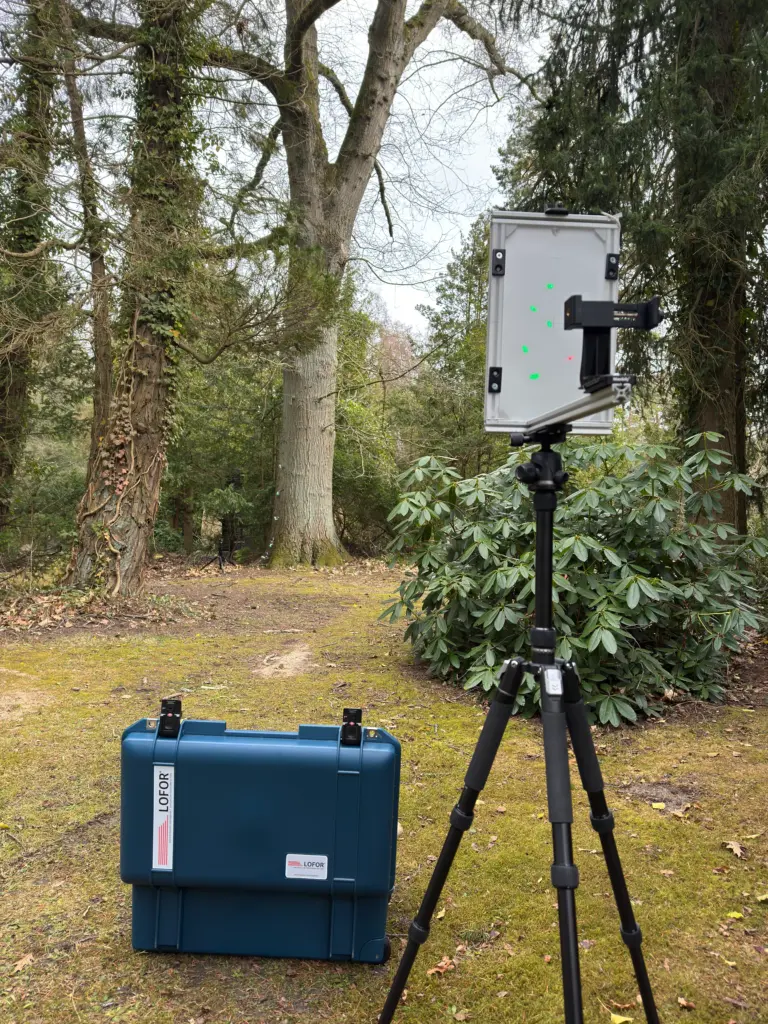
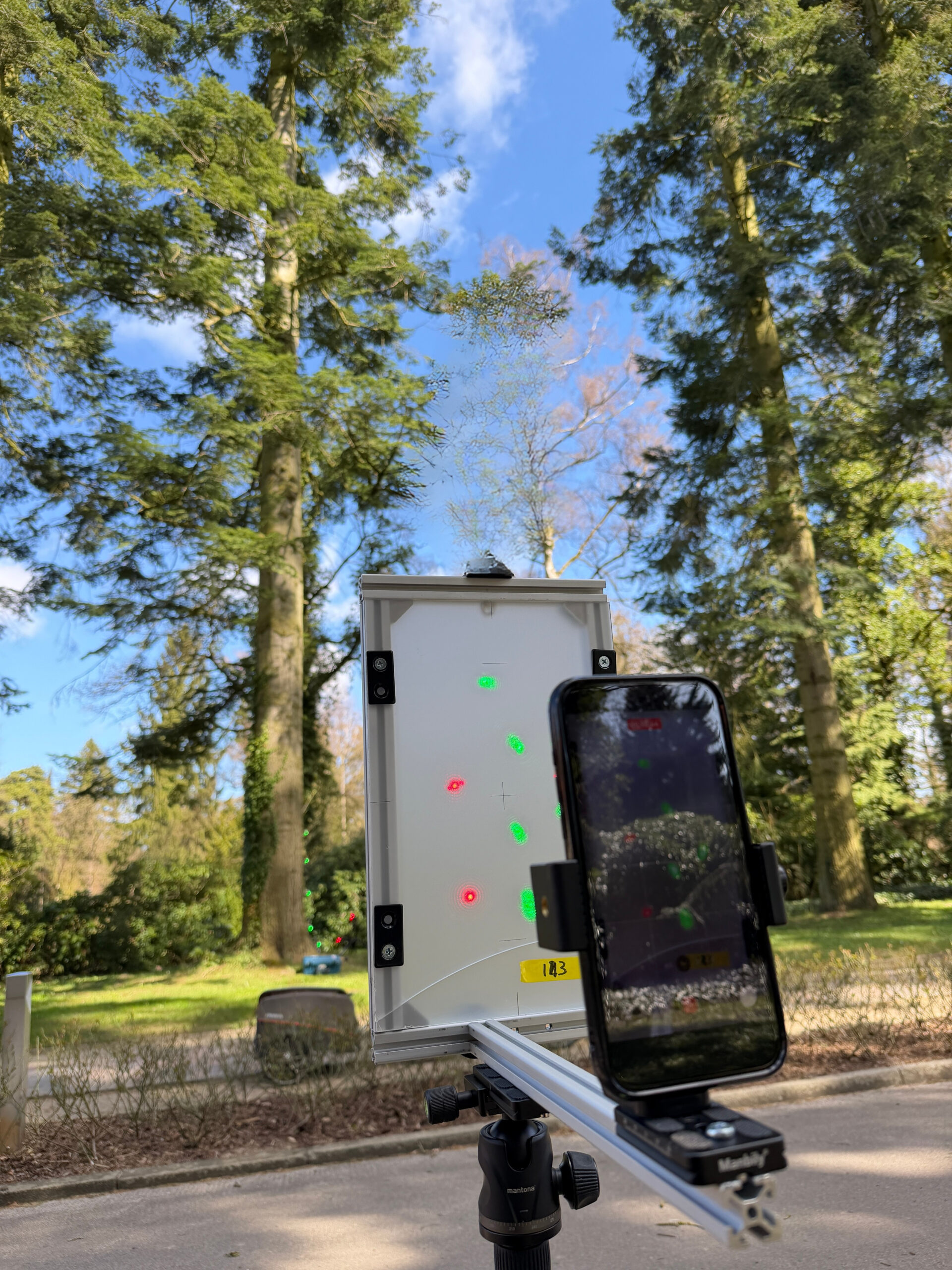
Sensitivity increases with the distance between lasers and projection surface. Clear line of sight is required; vegetation or infrastructure may obstruct the measurement.